
Unlocking Trade: China–Europe Railway Express
Within under ten years, the China Railway Express has made thousands of journeys across continents. Starting operations in 2011 and has grown into a transformative force in worldwide freight transport. This corridor connects Asian manufacturing centers with European buyers at remarkable speed. It’s part of the Belt and Road initiative, it supports steady schedules and consistent transit performance.
The China–Europe freight rail link provides an efficient channel for cross-border commerce. It allows firms to respond to increasing customer needs. That is a major edge in today’s rapid-fire marketplace.
Shippers depend on rail networks for quick goods movement and cost savings. The corridor between China and Europe offers a specialized option for extended freight routes. It plays a vital role in China’s ambition to widen trade corridors. It opens up new opportunities for reliable distribution across multiple countries.
- These trains shorten delivery times from Asian hubs to European markets
- Stable freight paths support better inventory planning for businesses
- The Belt and Road vision drives stronger trade ties
- Transnational supply chains enjoy time savings and cost efficiencies
- Companies leverage a streamlined route for high-volume exports and imports
Introduction to the Expanding Global Trade Network
As globalization intensifies, states and enterprises search for trustworthy transport corridors spanning great distances. The China–Europe Express rail service forms a crucial element of the Belt and Road initiative. It bridges Asian regions with Western markets, allowing sectors to use swifter corridors and lower their carbon footprint.
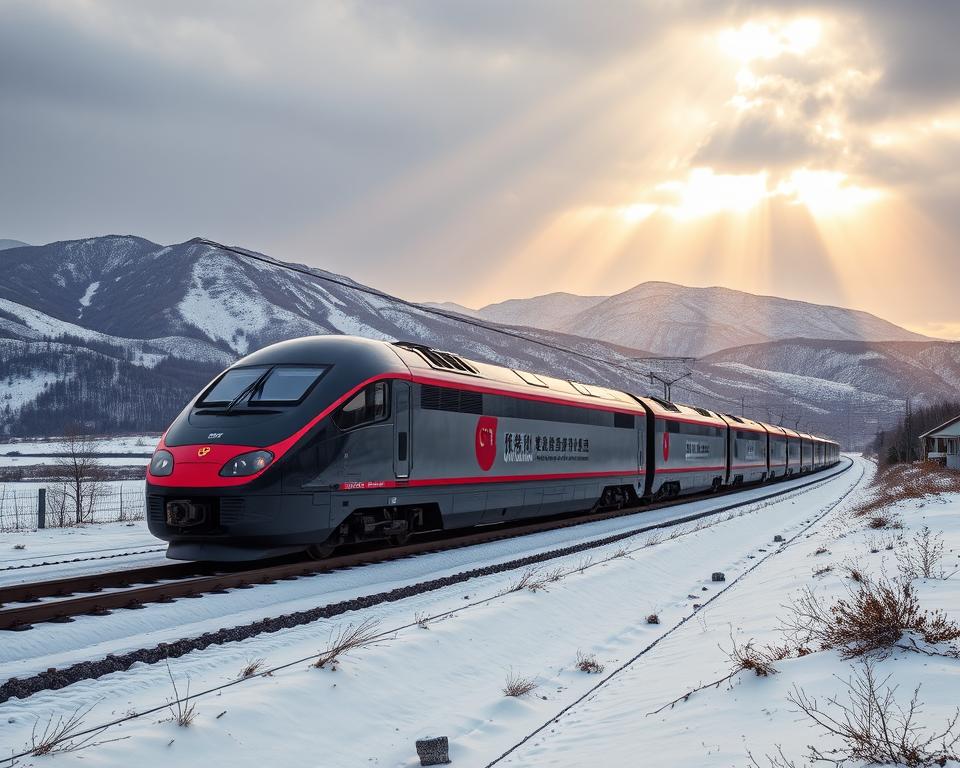
China’s Role in Building Cross-Border Links
China is investing heavily in rail networks, strengthening ties with the world. The China-Europe Railway Express has made over 100,000 trips, carrying over 11 million TEUs representing more than $420 billion in goods. This achievement creates new trade paths, strengthening shipping competitiveness while promoting greener growth.
New Prospects for Western Economies
Companies in Western markets benefit from this surge in global trade. They benefit from faster delivery, resilient logistics, and decreased emissions. This network offers a smart choice for companies looking to expand into new markets.
How the Belt and Road Initiative Began and What It Aims to Achieve
Through the Belt and Road Videos Initiative, new commercial routes are being forged spanning Asia, Europe, and other regions. Its purpose is to lower shipping expenses and unlock additional markets for manufacturers and distributors. The strategy weaves together road, sea, and rail systems, stimulating infrastructure expansion and encouraging global collaboration.
The China railway express stands out as a key component of efficient freight transport. It focuses on investing in rail technology, improving customs clearance, and establishing strategic routes. This supports stronger ties between Eastern manufacturing hubs and Western import markets. It also leads to smoother shipping and boosts local economies through new business opportunities.
China Europe Railway Express: Transforming Transcontinental Logistics
The rise of specialized freight corridors has opened new horizons for worldwide commerce. Businesses now aim for quicker deliveries and enhanced connectivity across continents. This initiative cuts down on unpredictable transit delays, revolutionizing the movement of goods between Asia and Europe.
Bridging the Gap for Chinese Enterprises
Exporters from China gain a competitive edge by reaching European buyers. Corridors like Chongqing–Duisburg demonstrate that electronics, auto components, and other goods can arrive in about half the maritime transit time. With fixed timetables, businesses can better plan their shipments, staying competitive in demanding markets.
Enhancing Cross-Border Efficiency
More efficient customs operations and set timetables smooth out extended freight journeys. This transformation leads to faster turnaround times and more stable supply chains for companies. Shippers gain from easier coordination via groupage services and intermodal links. The China railway express to Europe emerges as a key asset, linking production centers with distribution hubs for swift commerce.
Key Advantages of the China–Europe Freight Rail Service
For companies seeking faster deliveries, the China–Europe freight route is an appealing choice. It fills the gap between slower ocean trips and expensive air freight. Through the Belt and Road initiative, trade corridors are expanding, allowing rapid movement of electronics, vehicles, and raw materials into Europe.
Rail journeys typically take around 12–18 days, clearly outpacing sea freight. Such speed appeals to businesses that prioritize rapid delivery to satisfy customer expectations. It encourages steady growth for manufacturers aiming to keep their supply chains reliable across borders.
Reduced Transit Times
Reduced travel time translates into faster order completion. This advantage matters to both small and large firms, as it cuts the waiting time for inventory restocking.
Cost-Effective Freight Forwarding Solutions
Rail shipping costs roughly one-fifth of comparable air freight. It offers a financially efficient approach while preserving product standards. Under the Belt and Road initiative, stronger partnerships and improved infrastructure are simplifying cross-continental commerce.
Strategic Importance of the China–Europe Railway Express
The China–Europe Express train stands as a cornerstone of China’s Belt and Road initiative. It brings together Asian exporters and European buyers, serving as a key channel for large-scale shipments. It handles over 50,000 types of goods and spans 25 countries, making it a reliable choice for distributors.
For big corporations, it provides a time-saving, environmentally friendlier option compared with conventional shipping. It stabilizes logistics networks, supporting more accurate stock control and serving expanding customer bases. It has become an important pillar in international freight transport, easing pressure on overloaded corridors.
- Fast deliveries that improve readiness for retail demand
- Lower carbon emissions that support sustainable expansion
- More reliable stock planning for diverse sectors
Companies across Europe now recognize new prospects through the China Railway Express. Predictable routes and steady capacity unlock additional markets. This partnership strengthens trade while protecting logistics from global disruptions.
How Eurasian Rail Routes Support Cross-Border Expansion
The China Belt and Road initiative opens new avenues by linking production sites with booming markets. This extensive network includes ports, highways, and inland terminals. It offers various routes that cut down transit times and enhance trade. The resulting synergy enhances rail logistics and pushes firms to explore faster cargo choices.
Major corridors, such as Xi’an to Hamburg and Chengdu to Lodz, extend cross-border reach for goods like electronics, textiles, and machinery. Shipments pass through coordinated networks that blend truck, barge, and train transport. This approach reduces shipping costs and promotes eco-friendly practices.
Major Intermodal Logistics Hubs
Locations such as Xi’an in China and Hamburg in Germany operate as central nodes for varied cargo. They enable faster distribution, use digital tracking tools, and alleviate bottlenecks.
| Hub | Location | Key Commodities | Connectivity Advantage |
|---|---|---|---|
| Xi’an | China | Electronics, Apparel | Robust East-West Links |
| Hamburg | Germany | Machinery, Automotive Parts | Port Integration |
| Chengdu | China | Textiles, Consumer Goods | Rail-Road Collaboration |
| Lodz | Poland | Various Industrial Products | Strategic EU Entry Point |
How European Supply Chains Are Affected
Producers gain from lower costs and quicker deliveries, enabling broad distribution across European markets. Such rail momentum supports Europe’s push toward greener logistics. It also opens up viable pathways for ongoing trade growth.
Ways Rail Logistics Reinforces International Trade
The China–Europe Express train, an important element of the Belt and Road initiative, is reshaping freight choices. It establishes cross-border connectivity, ensuring goods move smoothly between major markets. High-capacity trains enable a constant flow of goods, backing ongoing shipments and satisfying rising consumer demand.
Digital paperwork systems streamline customs processing across multiple nations. This streamlines customs processes, providing businesses with a smoother experience and quicker turnaround times. Real-time tracking tools add another layer of transparency, informing shippers about every key transit stage.
- Faster border checks supported by secure electronic documents
- Consistent freight schedules for stable inventory management
- Efficient transport that appeals to tech-oriented industries
Such innovations boost international connectivity, control expenses, and support on-time delivery. Companies can now reach global markets more easily while maintaining high quality and dependable service. Rail-based logistics is transforming international trade, helping many industries and customer groups.
Challenges and Future Prospects in Global Trade Connectivity
Trade corridors are expanding through rail connections, linking distant markets. The China Europe Express train, part of the China Belt and Road initiative, is reshaping global cargo movements. Border crossings along Eurasian rail lines require improved coordination to cut delays and handle growing volume.
Infrastructure Improvements for Long-Term Growth
Varying rail gauges make transshipment at nodes such as Alashankou necessary, which affects transit duration. These transfers require upgraded facilities and advanced tracking to ensure timely operations. The 95306 freight service platform supports better visibility, easing bottlenecks and promoting smoother cargo transfers.
Well-timed construction and corridor modernization open fresh opportunities for speedier and more eco-friendly logistics.
Deepening Cooperation with Belt and Road Enterprises from China
Cross-border agreements build trust among shippers and nations. Joint initiatives prioritize stable customs rules and advanced technologies that simplify long-haul freight. Robust cooperation with Belt and Road Chinese Enterprises helps improve service quality and delivers more integrated shipping experiences on Eurasian rail corridors.
This depth of cooperation lays the groundwork for steady progress and long-term trade advantages.
| Common Transport Hurdles | Potential Solutions |
|---|---|
| Varying Rail Gauges | Upgraded Transshipment Points |
| Time Delays at Borders | Digital Freight Platforms |
| Limited Cross-Border Coordination | Unified Customs Agreements |
How Transcontinental Railway Service Shapes Modern Commerce
In the modern interconnected economy, transcontinental rail corridors are crucial for companies that require dependable logistics. The China–Europe Express rail service belongs to the broader China Belt and Road initiative. It supports efficient cargo movement across many nations. According to Michael Schumann of the German Federal Association for Economic Development and Foreign Trade, it acts as a vital artery in worldwide supply chains. It strengthens reliability and robustness in international trade flows, including during periods of disruption. European trade associations commend its steady performance, even with port congestion.
Diversifying Supply Chains
Logistics planners gain from a more balanced portfolio of freight modes. This method reduces reliance on single transport modes. It opens new possibilities for firms to serve a broader global trade network. A mix of cost control, speed, and cargo safety grants companies an edge in evolving markets.
Handling Customs and Regulatory Rules
Regulatory customs requirements and packaging standards can slow or halt shipments. Transparent guidelines and harmonized procedures simplify cross-border handoffs. Firms build confidence by partnering with operators that handle compliance efficiently. This promotes steady growth in various industries.
| Advantage | Outcome |
|---|---|
| Reliable Schedules | Predictable transit times boost customer satisfaction |
| Expanded Reach | Greater access for smaller exporters and importers |
Technological Innovation in Rail Freight
Digital innovations are creating new possibilities for global commerce. This China Europe Express service under the Belt and Road framework demonstrates how modern tools can transform logistics. It enhances efficiency over long distances. Automated inspection equipment at border crossings increases accuracy, reducing wait times.
Advanced freight scheduling also plays a key role. They help minimize congestion on busy routes, keeping shipments moving smoothly. Such developments emphasize the need for a forward-looking system that supports punctual shipments.
Today’s transcontinental railway service makes use of online platforms like 95306. They deliver live tracking of containers and simplified customs pre-approval. Shippers can track their cargo and adjust plans if delays occur. These upgrades emphasize the need for a system that supports timely, predictable deliveries.
- Electronic customs workflows enabling faster entry
- Robot-assisted or automated checks that limit congestion at borders
- Smart scheduling tools that optimize train routing
This style of transcontinental railway service transforms traditional shipping methods. It fosters trust in a network built for growth and resilience. Worldwide merchants profit from deeper connections and steady technological progress.
Final Thoughts
As a major element of the Belt and Road Initiative, the China-Europe Railway Express has completed more than 100,000 runs. It has carried cargo valued at over $420 billion. The rail corridor links major markets, encourages greener logistics, and supports timely, secure delivery.
It functions as a strategic connector uniting Asia and Europe. Through its links between critical trade centers, it provides efficient forwarding services and reinforces multimodal transport. Companies gain from shorter transit times and reduced costs.
Modern infrastructure and unified procedures enhance reliability. As a result, the route remains a trusted option for cross-border freight. Strong partnerships across continents suggest further growth is on the horizon.
Technological innovation and ongoing improvements are opening new doors in trade. The railway remains a strong framework for expanded trade. It is shaping an era of steady progress, forging global ties.