
Bold Colorful Abstract Art for Contemporary Interiors
My earliest encounter with a vivid canvas reshaped my sense of space. A bland living room transformed instantly with the introduction of vibrant large abstract wall art. In moments, the room felt energized, lighter, and more focused. This experience taught me the unmatched power of color in influencing mood and initial impressions.
As much as 90% of first impressions hinge on color—abstract art uses this to advantage. Even without a literal story, a modern abstract can energize a dining room or calm a bedroom. The key lies in hue, shape, and visual strength. I support clients in giving neutral rooms personality without losing modern clarity.
Big canvas pieces act as visual anchors, adding structure and focus. With thoughtful size, framing, and strategy, vibrant works enhance instead of overwhelm. For maximum impact, I recommend browsing Extra Large Wall Art choices.
Highlights
- Color drives first impressions and mood—select art with purpose.
- Vivid abstracts deliver emotion sans literal scenes.
- Use modern abstracts sparingly for strongest results in minimal rooms.
- Oversized pieces ground spaces—watch proportions and frames.
- Vibrant contemporary artwork updates a room quickly and thoughtfully.
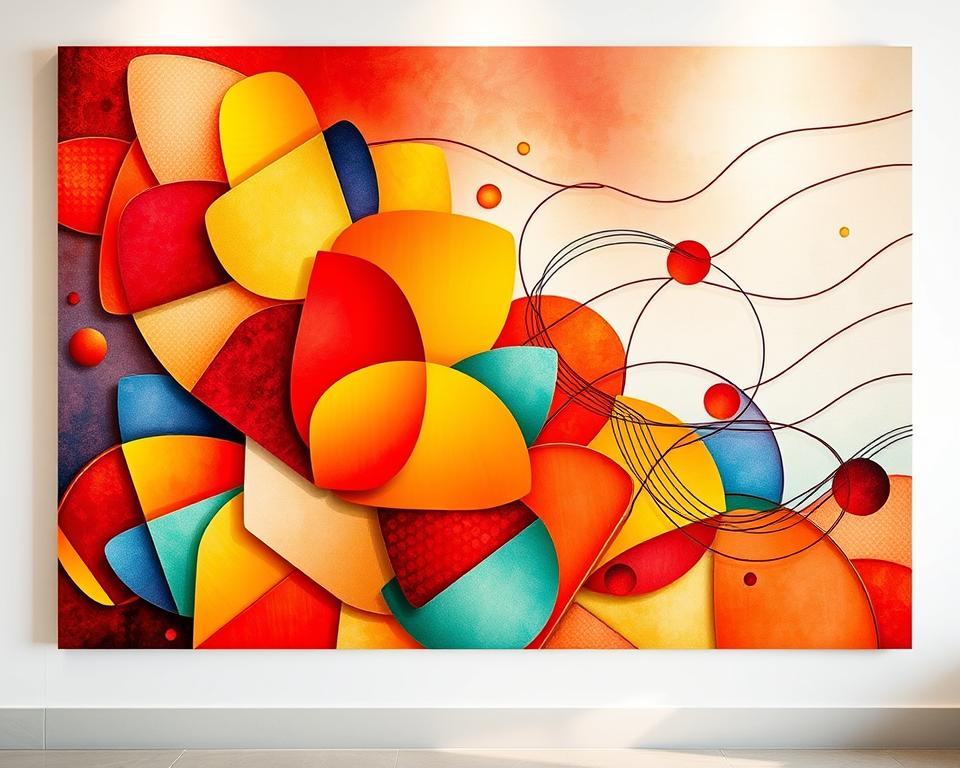
The Role of Color in Modern Design
Color influences immediate first reactions. Color sets mood early—often before furniture or lighting are noticed. I utilize color psychology to choose palettes fitting the purpose of each room.
Color’s Influence on Mood and First Impressions
Warm colors like red and orange energize a space. By contrast, blues and greens calm and relax. A bold wall or modern abstract can create a welcoming, vibrant feel. In private areas, softer hues encourage rest and concentration.
What Research Says About Color and Emotion
Reports in The Times note abstract art engages varied brain regions, boosting creativity. Thus, vibrant abstract artworks become key in spaces designed for brainstorming, like home offices. Monochrome pieces provide sophistication and contrast while keeping balance.
Applying color intentionally to shape room atmosphere
To craft the intended atmosphere, I match color saturation, temperature, and contrast with the room’s function. High saturation energizes; muted palettes soothe. Repeating art colors in accents builds cohesion. I demonstrate how XL pieces from Extra Large Wall Art can shift a room’s feel.
Practical Steps I Use:
- Identify the emotional aim: whether to energize, soothe, or inspire.
- Choose a primary hue with one–two accents.
- Anchor the design with a modern abstract painting or vibrant art piece.
- Add black-and-white for contrast if needed.
Using Vivid Abstracts in Design
Color-rich abstracts bring a lively voice to modern rooms. It communicates via form, color, and shape without literal storytelling. Modern abstracts balance intimacy with universality. That openness lets each viewer read it differently.
Compared to literal art, abstracts span a broader emotional range. While literal art captures specific scenes, abstract art’s essence changes with the environment. That adaptability makes it ideal for living rooms and foyers.
Even without imagery, form and saturation communicate strongly. Strong geometry grabs attention; gentle forms calm. Bright color energizes; subdued color soothes. These elements engage our brain differently, fostering creativity and fresh views in any room.
To infuse personality and depth in modern spaces, mix vivid abstract art with sleek designs. Use neutral walls to maximize impact without crowding. Understated fabrics help the art integrate cohesively.
- Place a signature abstract in each primary seating area.
- Aim for a balance between scale and space for clear visibility.
- Choose vivid art that coordinates with your scheme.
Selecting the Right Color Family
I advise on choosing a palette that matches purpose and personality. Your tone family shapes mood, circulation, and the way big art presents.
I recommend warm hues—reds, oranges, and yellows—for dining and social spaces. Such hues spark conversation and improve energy. Prevent clutter with one lead warm tone, echoed in soft goods.
Cool palettes—blues, greens—bring calm. Perfect for bedrooms and retreats. Combine cool art with soft linens and matte finishes for a tranquil, uncluttered feel.
Jewel tones, like emerald and sapphire, deliver a modern, bold statement. These deep, rich hues suggest luxury, particularly when highlighted in a single central piece of black and white Art. They shine above mantels, beds, or dining consoles.
- Try swatches and proofs before deciding.
- Use a hero hue and echo it with accents.
- Pair intense hues with neutrals so big art stands out.
Get samples from Extra Large Wall Art to test how hues behave in your lighting. Quick tests confirm the art fits your expectations.
Scale & Placement: Making Large Abstracts Work
Room feel is driven by scale. XL pieces change both atmosphere and proportion. Always measure to keep proportions on point.
I follow the two-thirds rule above furniture. Target art width ~two-thirds of the furniture below. This keeps proportions balanced. Art that’s too small may appear disconnected, while pieces that are too large might overwhelm the space.
Why Size Matters: Two-Thirds & Balance
Size by measuring furniture, then taking two-thirds. This keeps big art fitting well without clutter. It enhances sightlines and visual rhythm.
Best Spots for Oversized Canvases
Oversized colorful abstracts work best in living and dining rooms. They comfortably host bold statements. Big pieces anchor lounges and set boundaries in open plans. Houzz observations align: bold art adds personality, which I frequently observe.
Breathing Room, Eye Level & Avoiding Noise
Leave adequate space around each piece. Hanging art at eye level, which means the center should be around 57 to 60 inches off the floor, makes it easier to enjoy from various viewpoints. Leaving some space around the art helps in avoiding a cluttered look.
- Measure twice: match extra large wall art to sofas, tables, or open walls.
- Keep scale balanced: too big will dominate, too small will disappear.
- Let large art define functional areas.
- Maintain breathing room: avoid clutter by spacing pieces carefully.
Use Extra Large Wall Art sizing charts when in doubt. Those colorful Painting charts align canvases to common furniture widths, reducing return risk. For gallery walls, vary sizes but keep a visual rhythm. This yields unity over clutter.
Choosing Framed or Unframed Finishes
Choosing the right finish depends on the room and desired atmosphere. A framed piece adds a formal touch, ideal for living rooms and entryways. In contrast, an unframed, gallery-wrapped canvas offers a lightweight feel. Ideal in relaxed spaces like kitchens and family rooms.
For polish, I favor framed colorful abstracts. A slim black or metallic frame brings out the colors. Contrast improves, and plexi/museum glass protects. They protect the work and keep colors vibrant.
For minimalism, gallery wraps are my pick. The artwork extends around the stretcher bars, presenting it as a cohesive element. Great when art should support, not command, the space.
I match frames to room finishes. Metal frames mirror modern kitchens’ stainless steel and chrome. Wood frames warm up Scandi or boho schemes. Thin ebony frames suit monochrome pieces, balancing without cooling.
In sets, I mix finishes judiciously. Gallery wraps keep flow continuous. Occasionally, I’ll introduce a framed piece for emphasis. The aim is to let art make a statement, with the finish enhancing the overall style of the room.
Materials and Texture in Vivid Contemporary Art
I guide readers through material choices that shape how a piece reads in a room. Opting for acrylic, oil, or mixed-media influences color vibrancy, texture, and the interplay of light. I focus on practical fit so art complements the setting.
Working with artists/framers, I tailor finish advice to settings. Acrylic’s sharp, vivid look fits light-filled rooms. Oil gives depth for intimate rooms; mixed media adds texture for impact.
Texture and gloss significantly affect a room’s ambiance, especially minimalist ones. A glossy acrylic piece can animate a space with reflected light, contrasting with dull surfaces. Oil impasto provides depth and luxury with texture and shadow. Small textures help prints stand out in streamlined spaces.
Here are durable display methods to keep color true.
- Canvas prints with UV-resistant inks for long-term vibrancy.
- Framed paper + glazing to stabilize humidity.
- Acrylic face-mounted pieces that enhance saturation and offer easy cleaning.
Factor finish, sunlight, and humidity in your choice. High-traffic or sun-filled areas benefit from protective glazing or plexiglass. For a more personal touch in intimate settings, textured oils or mixed-media pieces invite exploration and emphasize vibrant abstracts.
My perspective on presentation emphasizes matching the work’s finish to the room’s scale and balancing sheen against other surfaces. Acrylic complements streamlined decor for a contemporary, dynamic effect. Conversely, pairing framed abstract prints with plush textiles integrates hues throughout the space, creating harmony.
Integrating Colorful Abstracts into Minimalist Spaces
Use a restrained strategy to introduce color-rich abstracts into minimal rooms. The optimal choice for minimalist living spaces is wall art that stands alone, allowing it to make a statement without overwhelming the space. A single bold piece commands attention while keeping clutter low.
Select a signature work from Extra Large Wall Art or a trusted source. Position it prominently against a neutral backdrop, above minimalist furniture, to ensure it captivates the viewer’s gaze immediately. It feels curated rather than aggressive.
Subtly echo elements from the piece in decor. Pick a few art shades for cushions or a rug to build cohesion. It keeps the space cohesive and intentional.
During the design process, I advocate for removing any element that might distract from the artwork. Simplicity strengthens calm. Leave breathing room so vibrancy and shape take focus.
- Anchor focus with one vivid accent.
- Echo a couple of hues in fabrics to unify.
- Keep negative space so the piece feels intentional.
Use matte/soft-gloss to limit reflections. Simple stretches and subtle frames fit best. These keep color and gesture central.
Arrange small abstracts with a plant or sculpture for subtle depth. Space/object balance underscores minimalism and spotlights art.
Styling multi-piece sets and gallery arrangements
I offer practical advice for arranging art in multi-piece sets so your rooms feel deliberate and serene. These artworks, spanning multiple panels, infuse walls with color and movement. Coordinated sets steer sightlines in common areas.
For rhythm without overcrowding, I prefer triptychs and diptychs. They give a rhythmical flow, guiding the gaze throughout a space. In bedrooms/corridors, pairs keep scale friendly and color continuous.
Spacing/alignment principles keep harmony. The total width of art pieces should approximate two-thirds of the furniture below them. Gap pieces by 2–4 inches for most homes.
Sets define zones in open layouts. A cohesive set behind the sofa defines seating. Staggered pieces in dining areas create soft division, suggesting design intent rather than overt separation.
Combine finishes carefully so variety reads as texture, not clash. Gallery wraps and frames pair well if they share color/theme. Repetition builds a coherent story.
Mind scale when mixing sizes. Anchor with the largest at eye level and flank with smaller. On big walls, evenly spaced large pieces keep flow.
A unified color scheme is key to home galleries. It turns variety into cohesion. Selective repetition helps textures and frames coexist.
- Use 2–4 inch gaps for close groupings.
- Keep group centers at eye level in living spaces.
- Match one color or motif across mixed finishes.
- Scale combined width to two-thirds of underlying furniture.
Practical Buying Guide (Extra Large Wall Art)
I guide you through selections that safeguard hues and simplify mounting. My recommendations hail from Extra Large Wall Art. They carry diverse made-to-order selections. You can choose from stretched canvas, framed canvas, and framed fine art paper. They ship across North America.
Check samples and mockups carefully pre-purchase. Lighting conditions can change how abstracts look. Test proofs in multiple lighting types.
Recommended Materials, Formats & Shipping Tips
Opt for acrylic to achieve a glossy, striking color impact visible even from afar. Canvas adds texture and softens vivid hues. Framed fine art prints are ideal for formal settings, where sharp edges are key.
Made-to-order pieces usually arrive ready to hang. Ensure carrier capability and robust packaging. Frames plus plexi protect color and cleanliness.
Sizing rules for sofas, beds, and dining areas
The two-thirds rule is my go-to for proportional harmony: the art’s width should match roughly two-thirds of the furniture below it. This keeps sofa zones balanced and clear.
Center over headboards and leave side margins. Over dining tables, echo table width for cohesion. Use the “Ultimate Wall Art Size Guide” for precise picks.
Framing options and protective finishes to keep colors vivid
A gallery wrap offers frameless sleekness. Adding a slim black or metallic frame can enhance the sophistication in your living room or office. Plexiglass covers guard against fading and dust.
- Apply UV finishes on sunny walls.
- Ask Extra Large Wall Art about archival inks for long-term vibrancy.
- Install professional hardware on extra-large works.
Planning with both aesthetics and practicality in mind is crucial. Pick right materials, sizes, and protections to keep large works vibrant long-term.
Vivid Abstract Art
Vivid abstracts moved from niche to mainstream at home. Loose forms and bold hues raise emotional tone. Even minor hue shifts shape atmosphere and influence behavior.
Why It’s Trending
People choose colorful abstracts to communicate beyond representation. Houzz reports highlight an increased demand for vivid artworks that rejuvenate living and dining spaces. One big work can set mood, anchor focus, and cut accessory clutter.
How Bold Pieces Transform Rooms
- Place an oversized canvas above a sofa to anchor open plans and complement neutrals.
- Warm palettes add instant conversational energy at dining tables.
- Blue-green abstracts with gentle intensity promote bedroom tranquility.
Abstract Art and Creativity
Evidence suggests abstracts activate wider neural networks. Vivid pieces in workspaces support fresh thinking.
Experience pieces in person at Extra Large Wall Art. Observing art within an actual setting allows for a better assessment of its scale, finish, and how it interacts with color in a room.
Balancing Color with Black, White & Neutrals
I rely on contrast to direct focus. Black and white abstract art invokes timeless calm. This lets a color anchor draw focus without chaos.
Flank a vivid anchor with compact monochrome works. Hang the color anchor at eye level. Cluster monochrome pieces around it cohesively.
Neutral grounds give color space. Such a backdrop makes a modern abstract painting pop. It clarifies visual hierarchy.
Small accents like throw pillows, lamps, or frames in black, white, or muted tones link art and decor. Echoing shapes/hues keeps bold pieces intentional, not overwhelming.
- Use a color anchor with two B/W flanks to create rhythm.
- Put neutral art behind the sofa to add depth.
- Thin black frames add structure without overpowering color’s warmth.
Test pairings with Extra Large Wall Art samples to check scale and tone. On-site viewing helps pick the right abstract and accents.
Wrapping Up
Color-forward abstracts transcend simple decoration. It puts emotion on canvas, shaping ambiance. Across dining, bedrooms, and living spaces, color, scale, and texture choices matter. Large pieces can define a room, while matching sets and distinctive vibrant art inject character and flow.
Vibrant contemporary art can improve a modern space without overwhelming it. Medium and frame affect how colors read. By echoing hues in soft furnishings and accents, a cohesive look is achieved. Use neutral grounds so colors pop.
Rising demand and research underscore bold, custom pieces. Extra Large Wall Art meets this with varied formats/sizes that stay vivid. I urge you to play with different color schemes and sizes. Explore Extra Large Wall Art to find the right pieces for your space.
Related: Painting Company Marketing